


Decoding Male Pattern Baldness with the Norwood Scale
Understanding Androgenetic Alopecia Progression and Mapping Your Path to Permanent Restoration
We use the Norwood Scale to map the genetic progression of male pattern baldness and design targeted and holistic, long-term treatment strategies.
The Biological Blueprint of Male Pattern Hair Loss
Male Pattern Hair Loss (MPHL)—clinically referred to as androgenetic alopecia—is the most prevalent cause of hair thinning in men, affecting millions globally. This progressive condition is heavily dictated by genetics and a biological sensitivity to Dihydrotestosterone (DHT), a hormone derived from testosterone.
When hair follicles are genetically susceptible to DHT, they undergo a process called miniaturisation. Over successive growth cycles, the hormone causes the follicles to shrink, producing increasingly finer, shorter, and lighter hairs until they eventually stop producing hair altogether. Because this thinning follows a highly predictable geographical path across the scalp, clinical specialists require a standardised framework to measure its progression and map out solutions.
Mapping MPB progression via the Norwood Scale
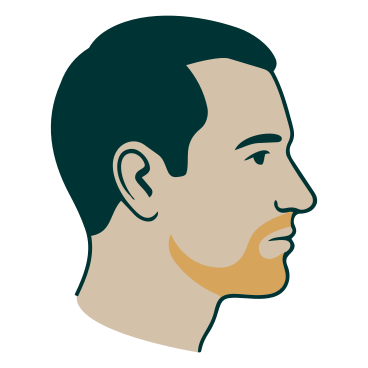
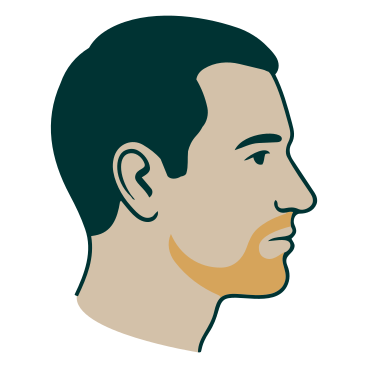
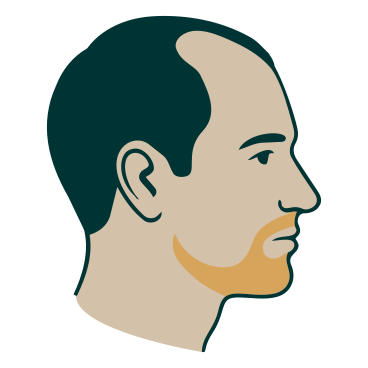
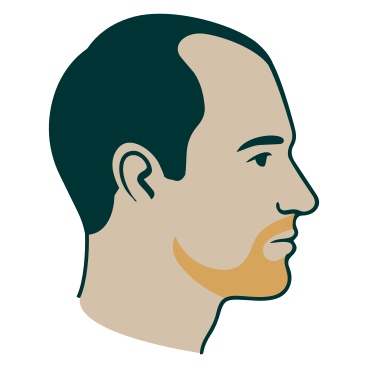
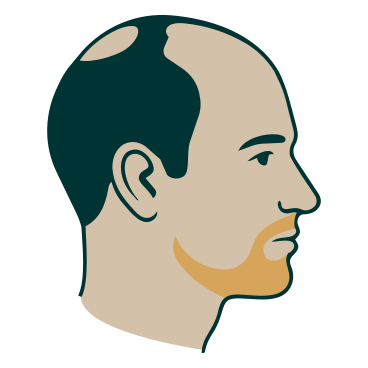
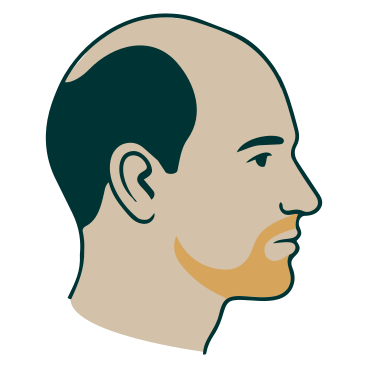
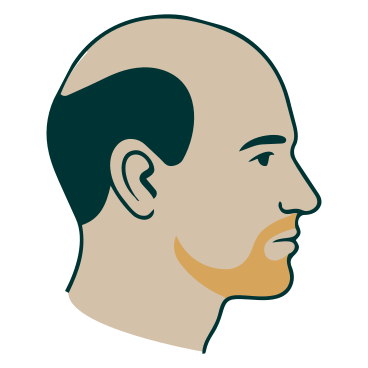
Introduced by Dr. O’Tar Norwood, the Norwood Scale is the universal clinical classification system used by doctors to track the stages of male pattern baldness. It categorises hair loss into seven distinct evolutionary stages:
- Stages 1 to 2: Characterised by a youthful hairline progressing into minor, natural recession around the temples. This is often the ideal stage to introduce preventative, non-surgical stabilisation.
- Stages 3 to 4: The temple recession deepens significantly into a classic “M” shape, and thinning may begin to appear on the crown (vertex). Hair loss is now highly visible.
- Stages 5 to 7: The bridge of hair separating the receding hairline and the bald crown completely breaks down. In Stage 7, only a spare horseshoe band of permanent hair remains around the back and sides of the head.
Identifying your exact Norwood stage allows us to accurately predict future loss patterns and determine if your current donor hair density is sufficient to achieve your aesthetic goals.
Learn about the Ludwig Scale, which deals with Female Hair Loss
Tailoring Treatments to Your Norwood Stage
At Elscott Medical, we use your Norwood classification as a roadmap that plots the hair you are losing today, helping us prescribe regrowth treatments, and anticipates the hair you could lose tomorrow, so we can create long-term hair health plans.
For patients in the early stages (Norwood 2–3), we often prioritise stabilising non-surgical protocols, such as custom-formulated Hair Loss Medications to halt DHT binding, alongside Regenerative Injections or Exosome Therapy to awaken miniaturising roots.
For advanced stages (Norwood 4–6+), we may design a bespoke FUE Hair Transplant plan. Because the permanent donor zone at the back of the head is finite, our surgeons strategically allocate every single graft, prioritising a strong frontal frame and blending into the mid-scalp to ensure the result ages completely gracefully over the next twenty years.
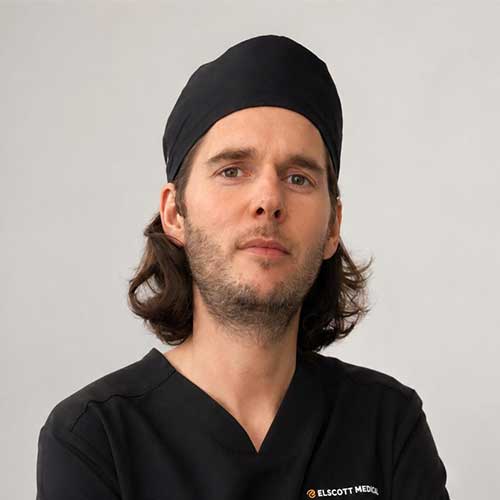
“The Norwood Scale is an invaluable diagnostic tool, but the real secret to successful hair restoration is anticipating how a patient will move through the scale over time. By combining precision micro-FUE surgery with proven trichology meds and therapies, we aim to stop the clock on male pattern baldness, delivering natural density that stands the test of time”
Dr Adrian Scott
Co-Founder & Hair Transplant Surgeon, Elscott Medical
Frequently Asked Questions
While an FUE hair transplant can achieve dramatic, life-changing transformations for advanced stages, total restoration depends on your available donor hair supply. If the donor zone at the back of the head is too thin or over-harvested, we cannot safely cover a completely bald scalp. In these complex cases, we excel at combining remaining scalp hair with advanced Body Hair Transplants (BHT) using beard or chest hair to maximise overall fullness.
Yes. If your hair follicles are merely miniaturised and have not completely closed up or scarred over, non-surgical intervention can be highly successful. A combination of clinical-grade Laser Light Therapy to boost cellular energy, paired with medical DHT blockers, can reverse miniaturisation, causing fine vellus hairs to grow back into thick, dark, terminal strands.
The hair follicles located at the lower back and sides of the scalp are biologically different from the hair on top. They possess a natural, genetic resistance to the destructive effects of the DHT hormone. This is why they remain intact even in advanced pattern baldness, and it is precisely why they serve as the permanent “safe donor zone” during an FUE transplant—retaining their lifetime genetic resistance even after being moved to the front.
Find out what sits behind your stage
A consultation at Elscott begins with what your hair loss is, why it is happening, and what, if anything, is worth doing about it.
Hair Knowledge Hub
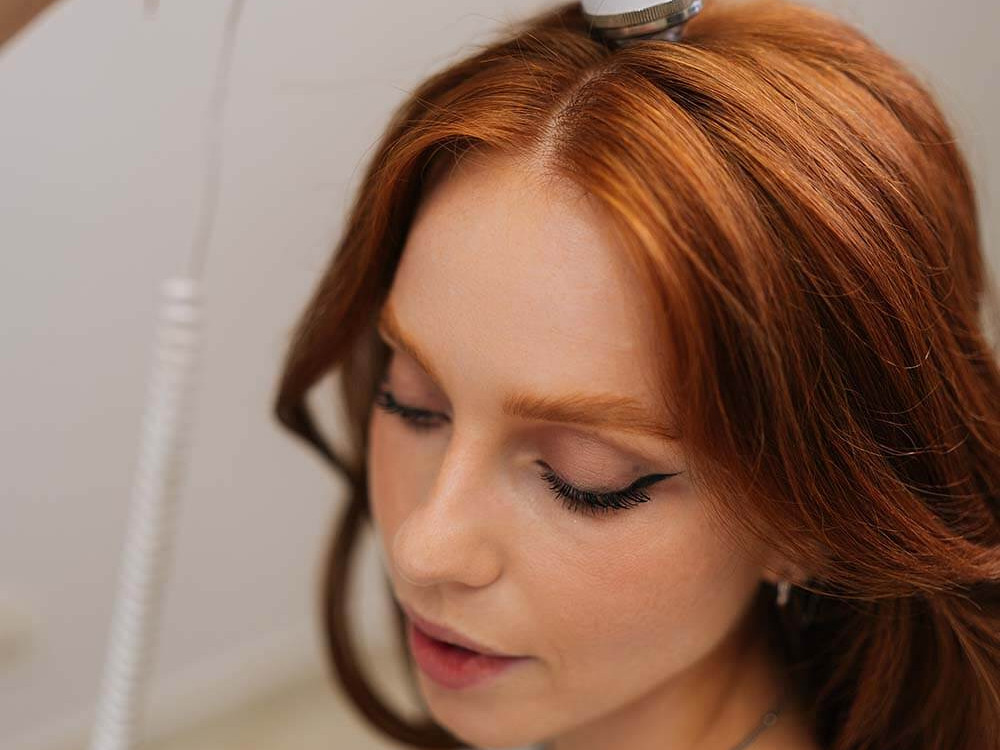
Female Hair Loss & The Ludwig Scale
We explain the unique biological triggers and diagnostic stages of female hair…
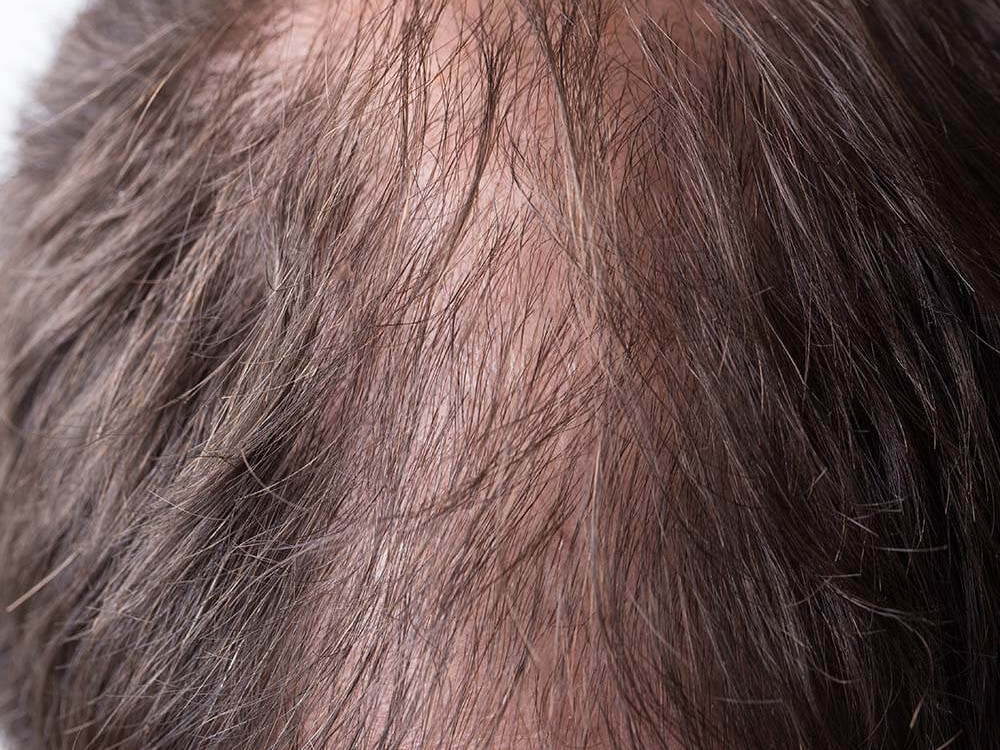
Hair Regrowth Medications and Biostimulants
Evaluating the ideal balance between surgical placement and medical protection…
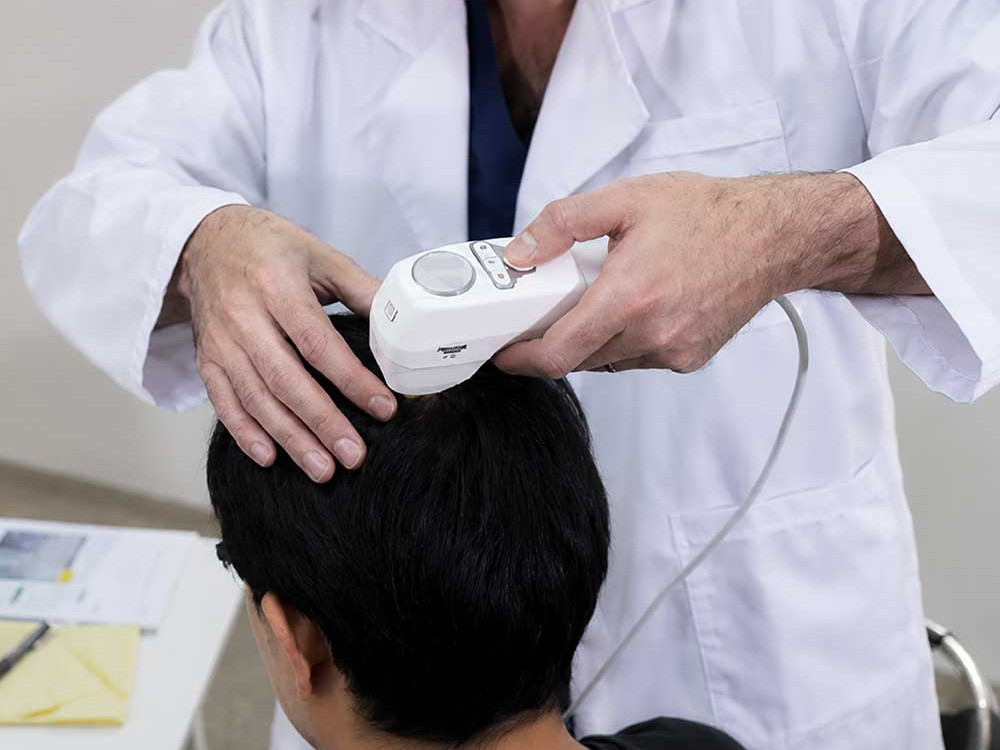
Patient Consultation and Diagnostic Assessment
Your hair regrowth journey at Elscott Medical begins with a doctor-led patient…

Red Hair – Scottish Genetics and Red Hair Loss
Scotland has the highest global prevalence of the MC1R red hair gene. Discover…