


Understanding Female Hair Loss: The Ludwig Scale and Advanced Restoration Paths
Navigating Diagnostic Stages, Emotional Challenges, and Targeted Medical Solutions for Women
We explain the unique biological triggers and diagnostic stages of female hair thinning while exploring sensitive, medically proven restoration pathways designed specifically for women.
The Complex Reality of Female Hair Thinning
While society often associates hair thinning primarily with men, the reality is that hair loss among women is extraordinarily common across the UK. Statistically up to 50% of UK women experience some form of significant, noticeable hair thinning or hair loss during their lifetime, with the prevalence rising sharply post-menopause.
Unlike the localised, distinct recession patterns seen in men, female hair loss is characterised by diffuse thinning across the entire mid-scalp, crown, and parting line.
This condition is highly complex, often triggered by a delicate interplay of genetic predispositions, fluctuating hormonal cycles (such as post-pregnancy or menopause), nutritional deficiencies, or underlying medical conditions.
Because female hair thinning behaves so differently from male pattern baldness, it requires a dedicated diagnostic approach to map out an effective clinical response.
Mapping Progression via the Ludwig Scale
To assess and categorise the progression of diffuse thinning in women, hair restoration specialists utilise the universal Ludwig Scale. This clinical tool divides female pattern hair loss into three distinct, progressive types:
- Ludwig Type I (Mild): Thinning begins at the top of the scalp, showing an early widening of the central parting line. At this foundational stage, the hair loss can easily be camouflaged with clever styling, but it represents the most critical window to introduce non-surgical stabilisation.
- Ludwig Type II (Moderate): The central part widens significantly, and diffuse thinning becomes pronounced across the entire crown. Hair volume and density are visibly reduced.
- Ludwig Type III (Advanced): The hair on the top of the head becomes highly sparse, leaving the underlying scalp clearly visible to the naked eye.
By identifying your exact placement on the Ludwig Scale through detailed trichoscopic imaging, our surgical team can construct an accurate, realistic timeline for your hair restoration journey
Learn about the Norwood Scale, which deals with Male Hair Loss
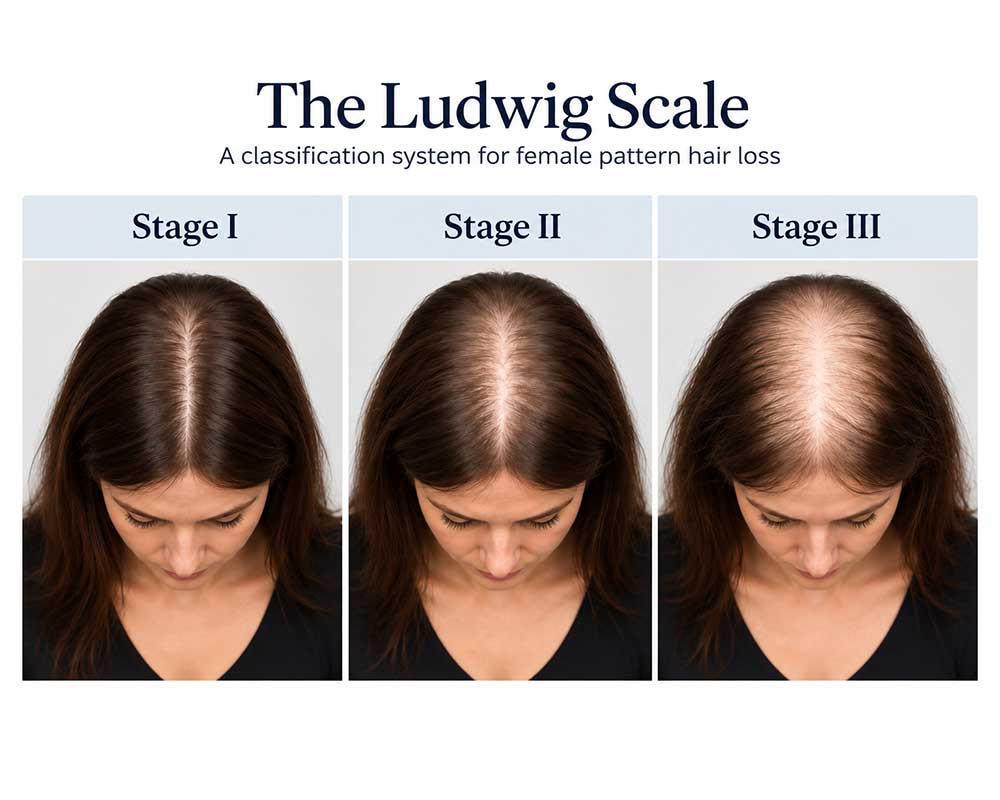
Mapping Progression via the Ludwig Scale
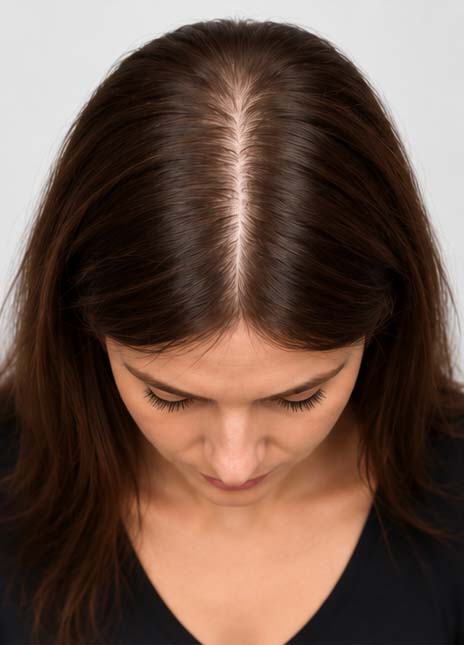
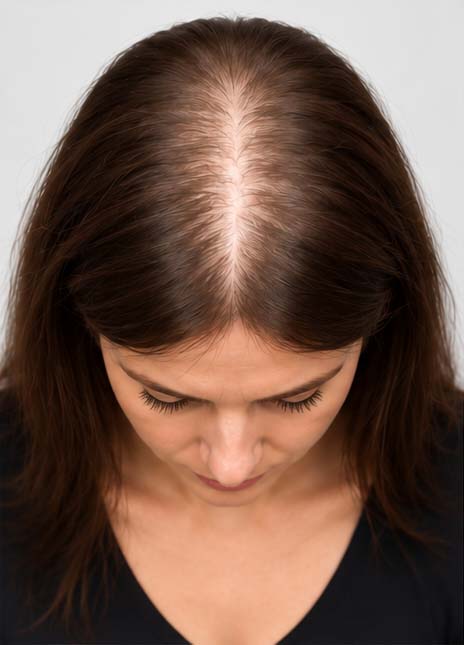
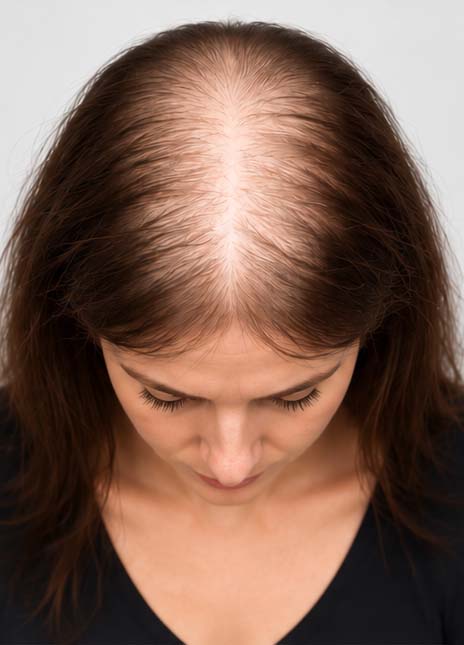
To assess and categorise the progression of diffuse thinning in women, hair restoration specialists utilise the universal Ludwig Scale. This clinical tool divides female pattern hair loss into three distinct, progressive types:
- Ludwig Type I (Mild): Thinning begins at the top of the scalp, showing an early widening of the central parting line. At this foundational stage, the hair loss can easily be camouflaged with clever styling, but it represents the most critical window to introduce non-surgical stabilisation.
- Ludwig Type II (Moderate): The central part widens significantly, and diffuse thinning becomes pronounced across the entire crown. Hair volume and density are visibly reduced.
- Ludwig Type III (Advanced): The hair on the top of the head becomes highly sparse, leaving the underlying scalp clearly visible to the naked eye.
By identifying your exact placement on the Ludwig Scale through detailed trichoscopic imaging, our surgical team can construct an accurate, realistic timeline for your hair restoration journey
Learn about the Norwood Scale, which deals with Male Hair Loss
Compassionate Restoration & Chemotherapy Recovery
At Elscott Medical, we understand that hair loss is a profoundly emotional experience that impacts a woman’s identity and self-confidence. This emotional distress is perhaps most acute for women undergoing chemotherapy or cancer treatments. The rapid, total hair loss caused by oncology drugs can be deeply jarring. We want to offer absolute reassurance: chemotherapy hair loss is almost always temporary, as the medications target rapidly dividing cells without permanently destroying the follicle stems beneath the skin. Once your oncology treatments are safely completed, hair can naturally begin a regrowth journey, though it may initially return with a completely altered texture or color.
Our advanced, holistic, and meticulous approach is engineered to nurture your scalp through every phase of recovery—whether you are dealing with chronic genetic thinning or post-medical healing. For women with stable Type I or II thinning, we design powerful, drug-free restoration paths using Laser Light Therapy to maximise cellular energy, paired with Regenerative Injections or cutting-edge Exosome Therapy to awaken resting follicles.
For advanced Type III cases where a permanent donor supply is viable, a tailored FUE Hair Transplant can be integrated to build permanent density along the front and parting lines.
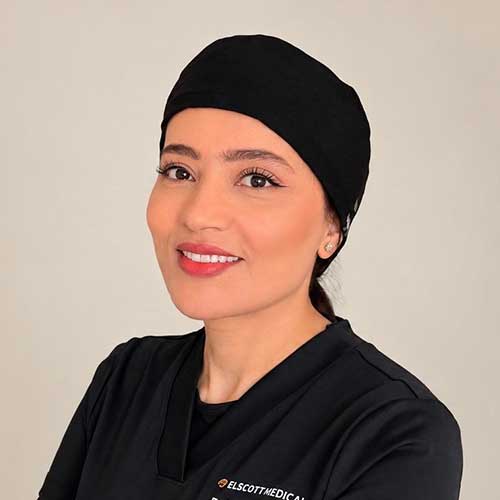
“Female hair loss is a deeply personal and nuanced condition that requires an immense amount of clinical empathy and medical precision. We never look at a female scalp simply as a candidate for surgery; we look at the underlying hormonal, medical, and emotional factors driving the change. By pairing targeted cellular therapies with a compassionate, long-term plan, we don’t just restore a woman’s hair density—we restore her sense of self.”
Dr Hala Elgmati
Co-Founder & Hair Transplant Surgeon, Elscott Medical
Frequently Asked Questions
Yes, women can absolutely be excellent candidates for an FUE hair transplant, provided they have stable and dense donor hair available at the lower back of the head. Because female hair loss is usually diffuse and affects the entire upper scalp, surgery is most effective when used strategically to build concentrated, permanent density right along a widening central parting or a receding frontal hairline, hiding the thinned areas beneath a natural frame.
Most patients see their hair begin to sprout naturally within 2 to 6 months after finishing chemotherapy. If you wish to accelerate this process or improve the quality of the emerging hair, non-invasive therapies like Laser Light Therapy or nourishing scalp treatments can be introduced once your oncology team gives full medical clearance. We provide a gentle, deeply supportive environment to evaluate your scalp health post-recovery.
While both cause great distress, they stem from entirely different biological mechanisms:
- Stress-Induced Shedding (Telogen Effluvium): Severe physical or emotional stress can prematurely shock a large percentage of your hair roots into a resting phase. This causes sudden, heavy, diffuse shedding across the entire scalp roughly two to three months after the stressful event. Fortunately, this condition is temporary; once the underlying trigger is resolved, non-invasive treatments like Laser Light Therapy or Regenerative Injections can rapidly re-energise the follicles and accelerate healthy regrowth.
- Autoimmune Thinning (Alopecia Areata): This occurs when the body’s own immune system mistakenly attacks healthy hair follicles, typically causing distinct, smooth, round bald patches rather than all-over thinning. Because this is an active inflammatory condition, surgical options like an FUE hair transplant are not appropriate. Instead, it requires a meticulous medical evaluation to suppress the localised inflammation and safely stabilise the scalp.
Hormones are a primary driver of female hair thinning. A drop in estrogen and progesterone—which occurs most commonly during menopause or following childbirth—allows trace levels of male hormones (androgens) within a woman’s body to become more dominant. These androgens interact with sensitive hair roots, causing the hair follicles to shrink, shorten their growth cycles, and shed prematurely. Managing this early with custom Hair Loss Medications can safely protect the follicles from these hormonal shifts.
Ready to take your first step?
A consultation at Elscott begins with what your hair loss is, why it is happening, and what, if anything, is worth doing about it.
Hair Knowledge Hub
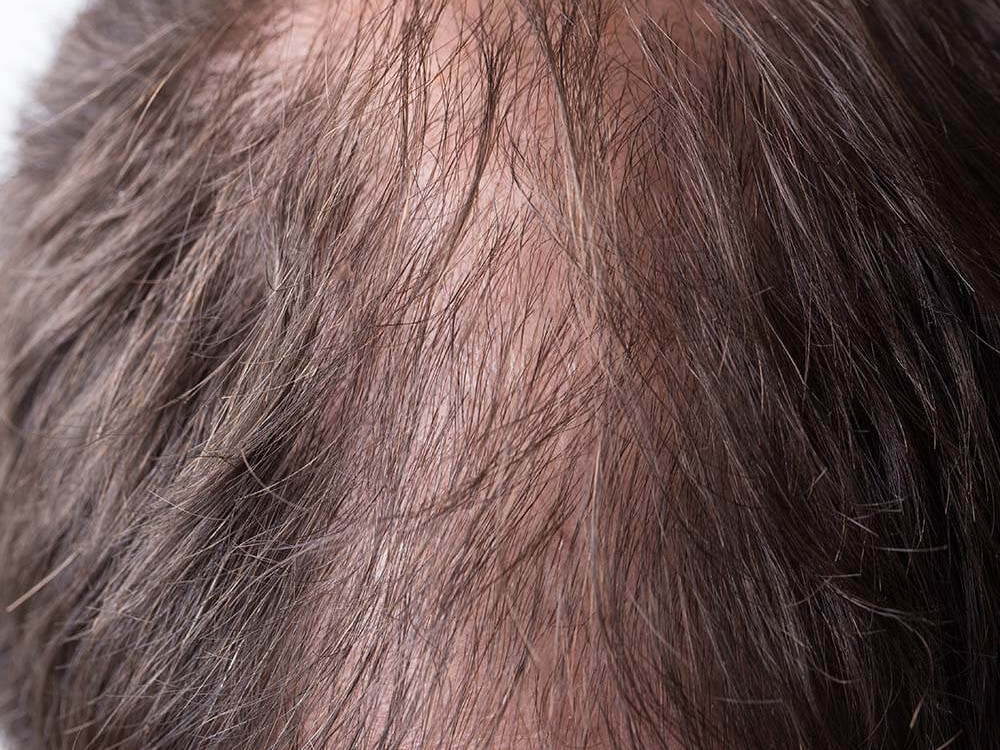
Hair Regrowth Medications and Biostimulants
Evaluating the ideal balance between surgical placement and medical protection…
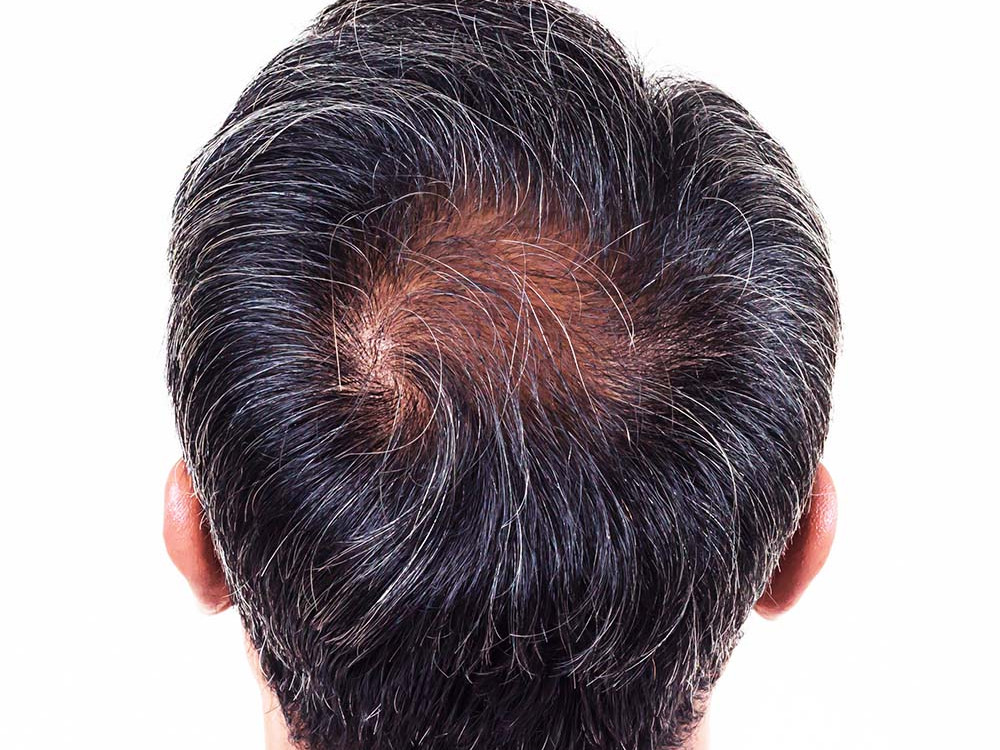
Male Pattern Baldness and The Norwood Scale
Understanding genetic hair thinning, Male Pattern Baldness and the Norwood…
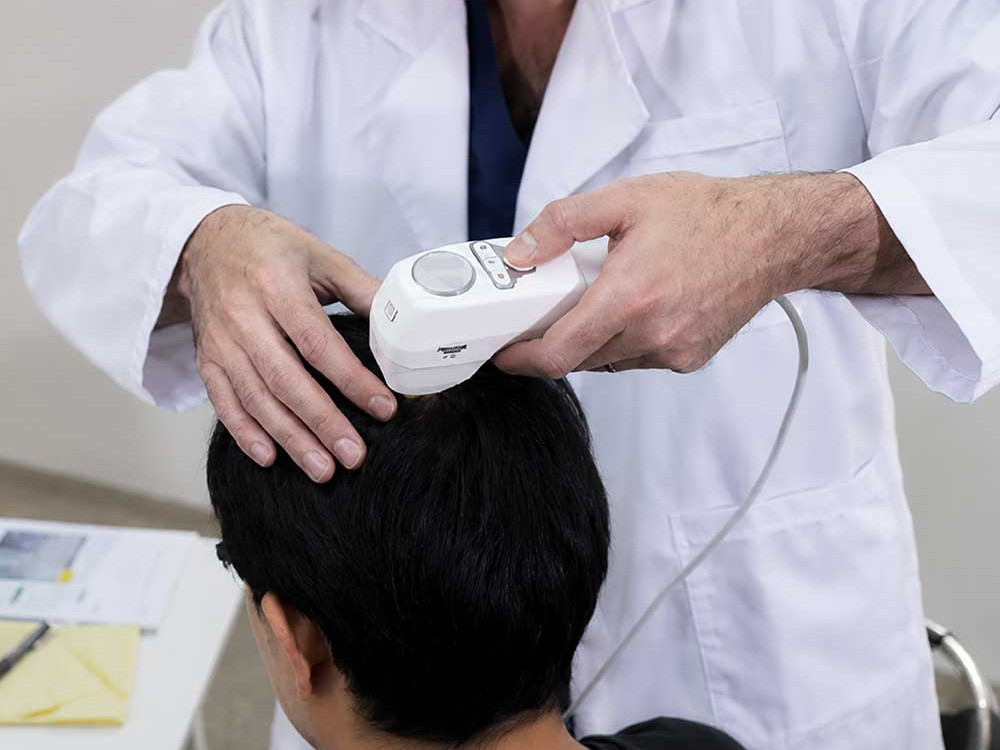
Patient Consultation and Diagnostic Assessment
Your hair regrowth journey at Elscott Medical begins with a doctor-led patient…

Red Hair – Scottish Genetics and Red Hair Loss
Scotland has the highest global prevalence of the MC1R red hair gene. Discover…