


Beard and Moustache Transplant Glasgow
Surgical Precision | Natural Results | Doctor-led from start to finish
Using the FUE (Follicular Unit Excision) method, we can create a fuller, thicker beard that eliminates areas of patchy, thin or non-existent facial hair.
Every consultation is led by our surgeons.
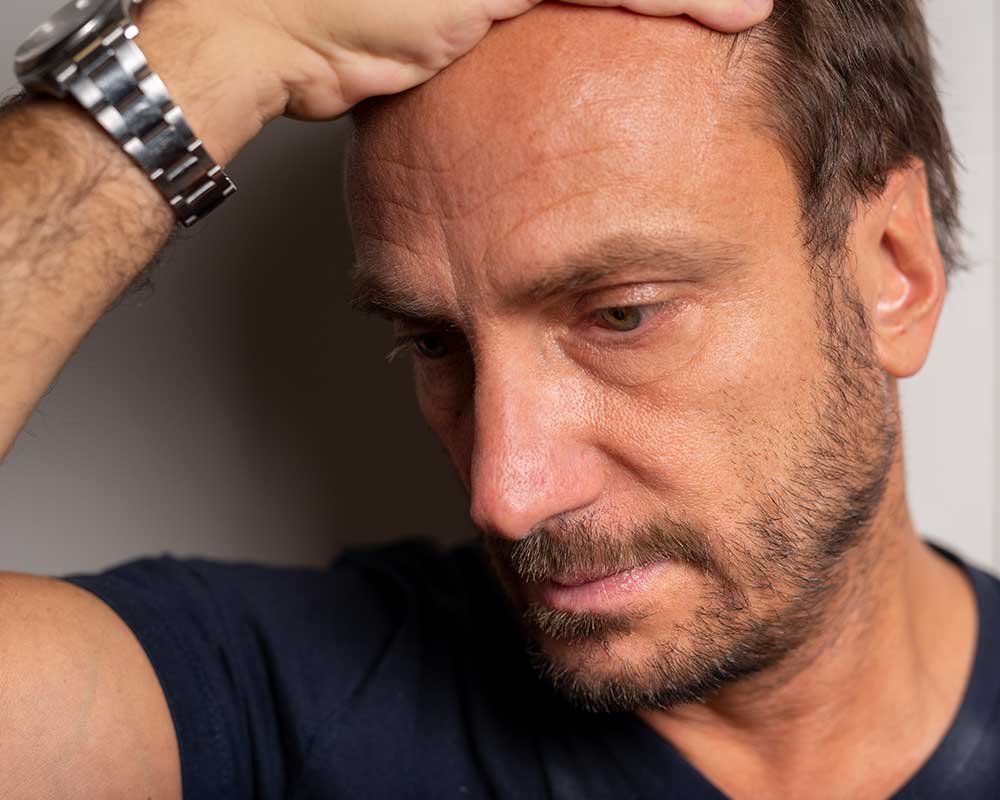
What is a Beard/Moustache Transplant?
This permanent, surgical procedure uses hair from a donor area on the scalp or under the chin to fill in areas on the cheeks, moustache, or goatee where facial hair is deficient or absent.
Single or double or treble hair follicles are extracted from a donor area (usually the back of the scalp or under the chin) and first examined for structural integrity before being graded and inserted into the recipient area to mimic native facial hair density and texture.
Are you suitable for a beard or moustache transplant?
You might be a man who cannot grow a full, even beard due to genetics, sparse hair growth or conditions such as alopecia barbae. We understand the concern and anxiety this can cause when a masculine or styled beard appearance is desired. Patients also seek beard transplants to fill in areas where hair was lost due to accidents, burns, or surgical, acne, or cleft lip scars.
In addition, transgender men may use this procedure as part of their transition to create a more masculine look; more info on our Transgender Hair Transplant page.
The Beard/Moustache Transplant Process
01
Design
Facial mapping, beard / moustache planning and donor area assessment
02
Extraction
Individual follicle harvesting – single hairs are critical for creating a soft, natural edge along the cheeks or borders of the facial design
03
Implantation
Follicles are selected, careful matching or enhancement of facial hair density, small diameter sharp implanters help precise placement
04
Recovery and growth
Post procedure care and healing, stabilisation and monitoring
The Elscott Medical approach
Whether you are filling patchy growth, defining a jawline, or camouflaging facial scars, our approach is completely bespoke, combining artistic design with micro-surgical precision. First, our doctors conduct a full trichological assessment before evaluating your facial anatomy, donor density, and natural growth vectors. We avoid generic templates—every cheek line, jaw contour, and moustache border is mapped by hand to complement your natural features and age gracefully.
Because facial hair grows at exceptionally flat angles and in distinct directional whorls, our surgeons carefully match the precise angle, orientation, and single-follicle depth required for seamless integration. Taking a holistic view, we also evaluate your scalp and skin health to maximise graft survival, delivering dense, completely natural facial hair.
The procedure
Under local anaesthetic, healthy hair follicles are extracted from the permanent donor zone at the back of your head using refined Follicular Unit Excision (FUE) tools.
Our team carefully implants the grafts directly into the targeted cheek, chin, or moustache areas. Controlling the shallow angles and precise direction of these sites is critical to ensure your new beard lays naturally flat against the skin. The procedure takes between four to eight hours, during which you remain comfortable and awake.
Recovery and results
Initial healing takes 5 to 7 days, with most patients returning to light routines quickly. Small crusts and mild redness form around the new grafts and these generally slough off between days 7 and 10 with gentle washing.
You will receive a tailored aftercare protocol and direct surgical guidance to protect the grafts during this vital initial healing window.
The transplanted hair naturally sheds within two to four weeks—a standard part of the biological growth cycle. Brand-new, permanent growth begins around month three, steadily increasing in density over the following months. By 10 to 12 months, your full results mature, providing a natural beard or moustache you can trim, shave, and style normally.
We schedule follow-up appointments at one week, one month, six months, and twelve months to monitor your progress and provide ongoing guidance.
Get in touch, and let's discuss your needs
A consultation at Elscott begins with what your hair loss is, why it is happening, and what, if anything, is worth doing about it.
Price
Typically from £3,000-£4,000
Anaesthetic
Local anaesthetic
Procedure time
3-6 hours
Recovery
7-10 days
Scarring
Minimal, pin-point
Suitable for
Men desiring higher density in beard area most commonly
Results
Permanent implant of natural-looking dense hair to cover areas of patchy facial hair
No visible, raised, or textured scarring
Permanent growth from transplanted follicles
Beard hair that can be cut, styled, and treated normally
The Elscott Approach
Surgeon performs every step — no technician delegation
Bespoke planning with trichological assessment
Combination-therapy approach when appropriate
Scheduled follow-ups over 12+ months
Post-beard transplant timeline
Timeline
Action / Medication
Clinical Purpose
Days 1–7
Sterile Saline Spray / Corticosteroids
Graft hydration, anti-bacterial protection, reduces facial swelling.
Weeks 2–4
Gentle, non-perfumed face wash
Cleanse healing skin without disrupting newly anchored grafts.
Month 1+
Minoxidil (Foam preferred)
Vasodilation to stimulate blood flow and kickstart the growth phase.
Months 1-6
Periodic Regenerative Injection Sessions
Clinical biostimulation to improve graft survival rates and speed up results.
“We assess your scalp and facial health holistically to ensure your newly restored beard remains dense, healthy, and natural for a lifetime. Our aim is to restore facial symmetry and masculine confidence”.
Dr Adrian Scott
Co-Founder & Hair Transplant Surgeon, Elscott Medical
Frequently Asked Questions
No, once the healing process is complete, your results will look entirely natural. Because Follicular Unit Excision (FUE) extracts individual follicles using tools, it leaves only tiny pinpoint dots in the donor areas. These are virtually invisible. There is no ‘pluggy’ or artificial look—just seamless density.
The exact number of grafts required varies from patient to patient. Suitability depends on the size of the area experiencing hair loss and the density of your available donor hair at the back and sides of your head.
As a general guideline, minor beard restoration typically requires between 1,000 to 1,500 grafts.
Yes, and most often we will prescribe combo treatments. Combining an FUE transplant with non-surgical medical treatments—such as specialised pharmaceutical therapies or regenerative injections—is an optimal approach to assisting fast recovery and regrowth following your beard FUE.
While the transplanted hairs are permanent and genetically resistant to shedding, your original, non-transplanted hair may continue to thin over time. This is precisely why we conduct a full trichological assessment before designing your beard shape and density.
The transplanted hair follicles themselves are permanent and will continue to grow for a lifetime because they are harvested from “safe zones” genetically resistant to thinning. However, an FUE transplant does not cure the underlying cause of the sparse beard; therefore, your original, non-transplanted hair may continue to thin over time.
This is precisely why we conduct a full trichological assessment before designing your beard shape and density.
Prices very depending on the specifics of each case but, in general, Beard and Moustache Transplant costs between £3,000 and £4,000.
Ready to take your first step?
Every consultation is led by Hala or Adrian — our surgeons who will care for you from first conversation through to follow-up.
Hair Knowledge Hub
Female Hair Loss & The Ludwig Scale
We explain the unique biological triggers and diagnostic stages of female hair…
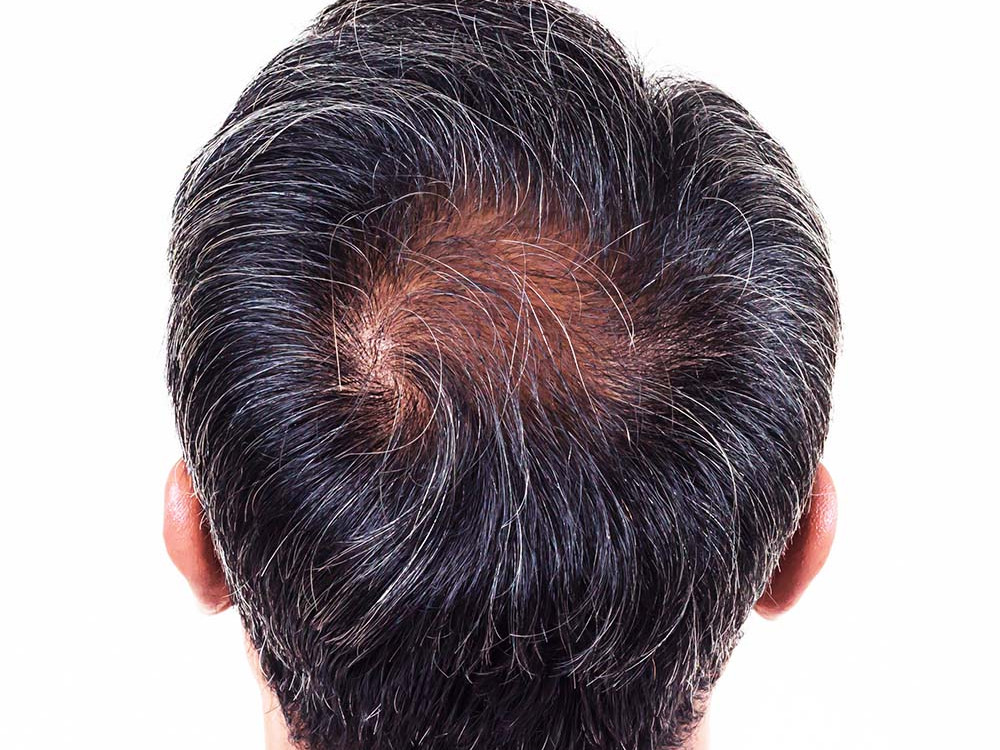
Male Pattern Baldness and The Norwood Scale
Understanding genetic hair thinning, Male Pattern Baldness and the Norwood…
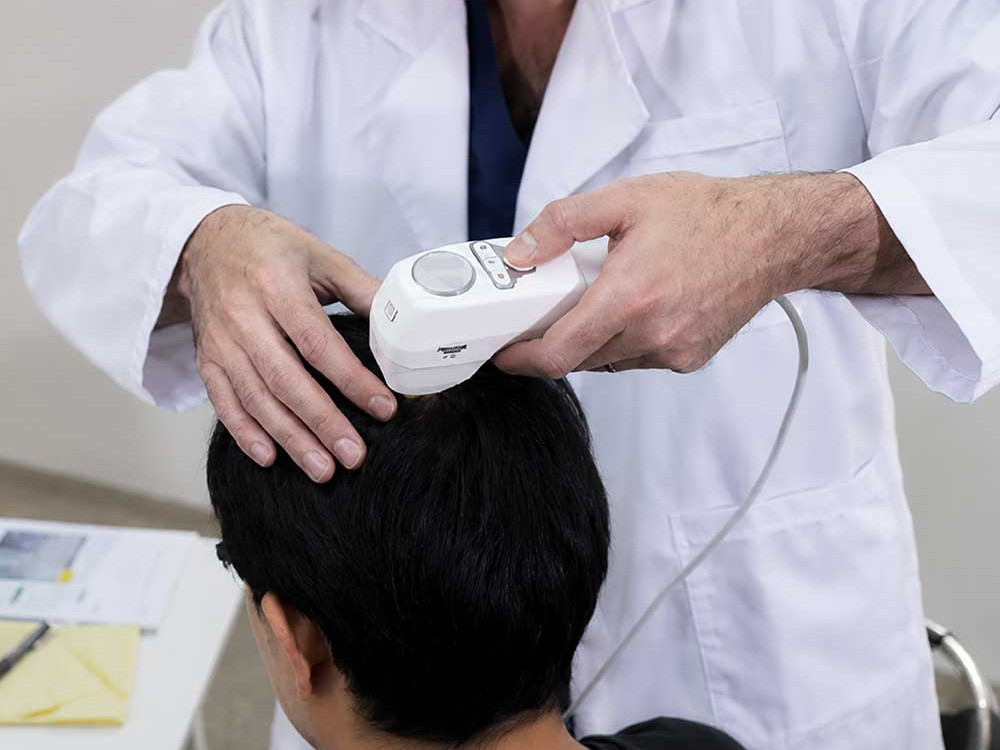
Patient Consultation and Diagnostic Assessment
Your hair regrowth journey at Elscott Medical begins with a doctor-led patient…
Red Hair – Scottish Genetics and Red Hair Loss
Scotland has the highest global prevalence of the MC1R red hair gene. Discover…