


FUE Hair Transplant Glasgow
Surgical Precision | Natural Results | Doctor-led from start to finish
Follicular Unit Excision (FUE) is the gold standard surgical procedure for hair restoration. At Elscott Medical, we excel in the FUE Hair Transplant method, using advanced minimally-invasive techniques. Our aim is to achieve natural-looking dense and healthy hair and to restore patient confidence.
Every consultation is led by our surgeons.
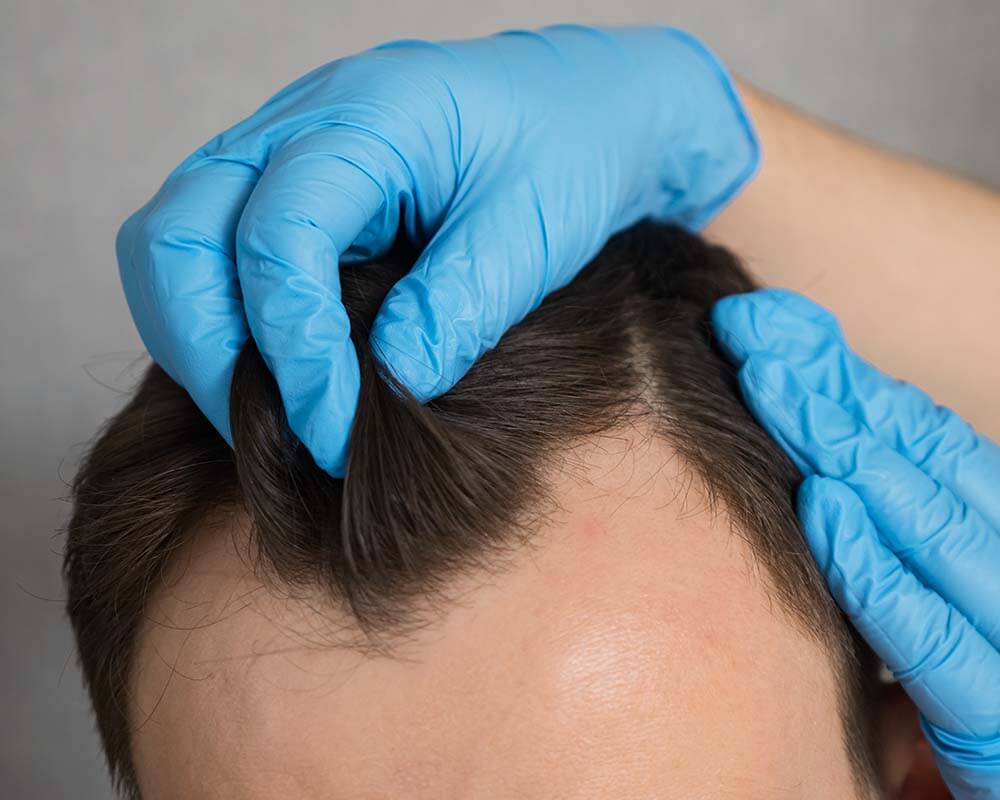
What is FUE?
FUE stands for Follicular Unit Excision. It is a modern, advanced method of hair transplantation where individual hair follicles are extracted from a donor area (usually the back or sides of the head, but sometimes from areas of body hair) and transplanted into thinning or balding areas.
No Linear Scarring: Leaves only tiny dots that can be virtually invisible, unlike older ‘strip-harvest’ methods.
Minimally Invasive: Performed under local anesthetic with rapid healing times.
Natural Results: Follicles are placed following your natural hair growth direction for a seamless look.
Is FUE right for you?
FUE Hair Transplant is suitable for most patterns of hair loss, provided you have adequate donor density. It works well for men and women, and can be used to restore hairlines, crowns, temples, eyebrows, and beards. During your consultation, we will assess your donor area, discuss realistic outcomes, and determine whether FUE is the right approach — or whether non-surgical treatment might be more appropriate at this stage. Assess your stage and type of hair loss using the Norwood Scale (for men), or the Ludwig Scale (for women) in our Hair Intelligence Hub
The FUE Process
01
Design
Hair loss mapping, planning and donor area assessment
02
Extraction
Individual follicle harvesting, preservation
03
Implantation
Precision placement and angling
04
Recovery and growth
Post procedure healing, stabilisation and monitoring
How we approach FUE at Elscott Medical
We do not separate surgery from overall scalp health. Before designing your procedure, we conduct a full trichological assessment to understand your hair loss features, donor density, and long-term prognosis.
Many patients benefit from combining FUE Hair Transplant with non-surgical treatments such as stimulatory therapies or medications. We assess every case holistically — surgery is one tool, not the only tool.
Every FUE procedure at Elscott Medical is performed entirely by a hair restoration doctor. From consultation to hairline design through to the final implantation, you receive expert guidance at every step.
At Elscott Medical, we blend scientific precision with an artistic eye. Our approach ensures every patient receives a completely bespoke hair restoration plan.
The procedure
On the day of your procedure, your doctor prepares the donor area and local anaesthetic is administered. Follicles are extracted one by one using a micro-punch tool, then carefully sorted and preserved before implantation. The surgeon implants each graft by hand using a sharp implanter device. Controlling the recipient sites at precise angles and depths is essential to match your natural hair growth pattern and to promote optimal healing.
The FUE Hair Transplant procedure typically takes between four and eight hours, depending on the complexity of the individual case and their needs. You remain awake throughout and can take breaks as needed. Most patients find the experience far more comfortable than anticipated.
Recovery and results
Initial healing takes 7-10 days. You can return to desk work within a few days, though we recommend avoiding strenuous exercise for two weeks. Any redness or scabbing subsides quickly.
Transplanted hair typically sheds within the first month — this is normal and expected. New growth begins around month three, with visible density increasing over the following months. Final results are apparent at 12-18 months.
We schedule follow-up appointments on an individual basis, typically at one week, one month, six months, and twelve months to monitor your progress and provide ongoing guidance.
Body Hair Transplant
If you have depleted scalp donor areas due to advanced male pattern baldness, scarring or poorly executed past transplants, we can harvest healthy ‘donor’ follicles from body hair as a ‘Plan B’ option. Suitable candidates for a Body Hair Transplantation (BHT) , must possess robust, high-density hair follicles on body donor areas such as the chest, beard or torso, along with realistic expectations regarding the unique texture and growth cycles of body hair.
Because body hair has a slightly shorter maximum growth phase, it provides excellent structural volume and density when mixed into thinning scalp hair.
Get in touch, and let's discuss your needs
A consultation at Elscott begins with what your hair loss is, why it is happening, and what, if anything, is worth doing about it.
Price
From £3,000
(Typically £7,000)
Anaesthetic
Local anaesthetic
Procedure time
4-8 hours
Recovery
7-10 days
Scarring
Minimal, pin-point
Suitable for
Male & female pattern hair loss
FUE Hair Transplant Results
Natural hairline design that ages gracefully
Minimal scarring — no linear strip scar
Permanent growth from transplanted follicles
Hair that can be cut, styled, and treated normally
The Elscott Approach
Surgeon performs every step — no technician delegation
Bespoke planning with trichological assessment
Combination-therapy approach when appropriate
Scheduled follow-up over 12+ months
“Our focus with every patient is to achieve a naturally dense hair restoration with long-lasting results. And by taking a holistic approach, we can formulate custom combination plans using advanced hair growth techniques, therapies and medications. We aim to restore your hair and your confidence.“
Dr Hala Elgmati
Co-Founder & Consultant Surgeon, Elscott Medical
Frequently Asked Questions
No, once the healing process is complete, your results will look entirely natural. Because Follicular Unit Excision (FUE) extracts individual follicles using micro-tools rather than removing a strip of scalp or body hair, it leaves only tiny, microscopic pinpoint dots at the back of the head. These are virtually invisible, even with short haircuts. There is no ‘pluggy’ or artificial look—just seamless density.
The exact number of grafts required varies from patient to patient. Suitability depends on the size of the area experiencing hair loss (such as a receding hairline or a thinning crown) and the density of your available donor hair at the back and sides of your head, or sometimes elsewhere on your body.
As a general guideline, minor hairline refinement or temple restoration typically requires between 1,000 to 1,500 grafts. More extensive male or female pattern baldness covering multiple areas may require 2,500 to 3,500+ grafts. We calculate an exact, safe graft count during your initial clinical assessment to ensure maximum density without over-harvesting your donor area.
Yes, and most often we will prescribe combo treatments. Combining an FUE transplant with non-surgical medical treatments—such as specialised pharmaceutical therapies or regenerative injections—is an excellent way to protect your remaining native hair from further thinning.
While the transplanted hairs are permanent and genetically more resistant to thinning, your non-transplanted hair remains susceptible to natural hair loss progression. Using a combination-therapy approach stabilises the surrounding area and ensures your overall result remains dense and uniform for years to come.
The transplanted hair follicles themselves are permanent and will continue to grow for a lifetime because they are harvested from “safe zones” genetically resistant to thinning. However, a FUE transplant does not cure the underlying cause of pattern baldness; therefore, your original, non-transplanted hair may continue to thin over time.
This is precisely why we conduct a medical and trichoscopic assessment before implantation mapping or designing your hairline. By predicting your future hair loss patterns and using stabilising treatments when appropriate, we design a strategic hairline that is built to age gracefully over the next twenty years.
Yes, although because afro-textured hair possesses a distinct anatomical structure, with a hidden subsurface curve, performing a successful transplant requires specialised micro-FUE tools and bespoke surgical techniques. Find out more on our dedicated Afro-Textured Hair Transplant page.
Packages start from £3,000, although treatment most commonly costs around £7,000.
No, body hair retains its original genetic characteristics, including its natural growth cycle and maximum length. While hair on your scalp stays in the active growth phase for years, body hair has a significantly shorter growth phase, meaning it typically grows to around 3 to 6 centimeters. Because of this, we strategically blend body hair grafts into the mid-scalp and crown to build dense, underlying volume, while reserving longer-growing scalp hair for the frontal hairline.
The beard area is universally considered the single best body hair donor source. Beard hair follicles are thick, robust, have a high survival rate similar to scalp hair, and grow relatively fast. The chest and torso serve as a secondary donor area if beard density is limited or unavailable. During your clinical consultation, our surgeons will evaluate the thickness, curl, and growth cycle of all potential donor sites to determine the optimal source for your scalp requirements.
Not when performed with micro-surgical precision. Our surgeons do not place body hair in solid blocks or along the delicate front hairline. Instead, body hair grafts are meticulously intermingled follicle-by-follicle among your existing scalp hair across the crown and mid-scalp. By matching the precise angle and exit direction of the surrounding hair, the coarser or slightly wavier texture of body hair seamlessly integrates, creating an illusion of natural, dense fullness.
Because we harvest individual follicles using refined Follicular Unit Excision (FUE) micro-punch tools, the procedure leaves barely visible scarring. The points of extraction heal into marks that fade into pale dots over time. When harvested correctly by an experienced surgeon across a broad donor area—such as under the chin or across the chest—these pinpoint marks become virtually invisible to the naked eye once healed.
Ready to take your first step?
Every consultation is led by Hala or Adrian — our surgeons who will care for you from first conversation through to follow-up
Hair Knowledge Hub

Red Hair – Scottish Genetics and Red Hair Loss
Scotland has the highest global prevalence of the MC1R red hair gene. Discover…
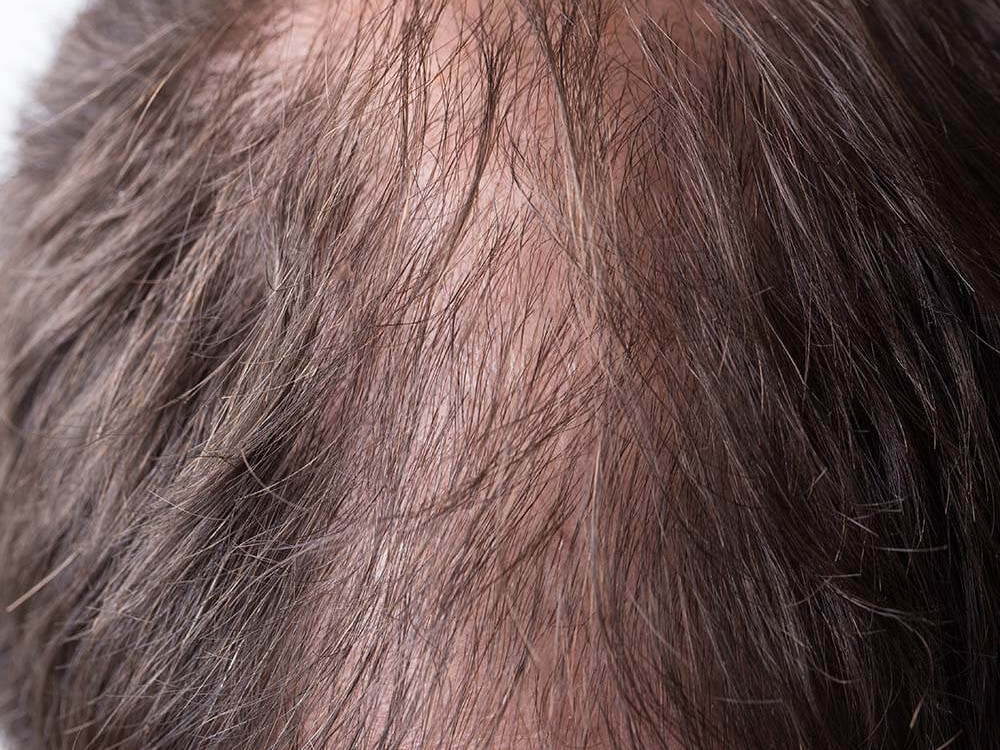
Hair Regrowth Medications and Biostimulants
Evaluating the ideal balance between surgical placement and medical protection…
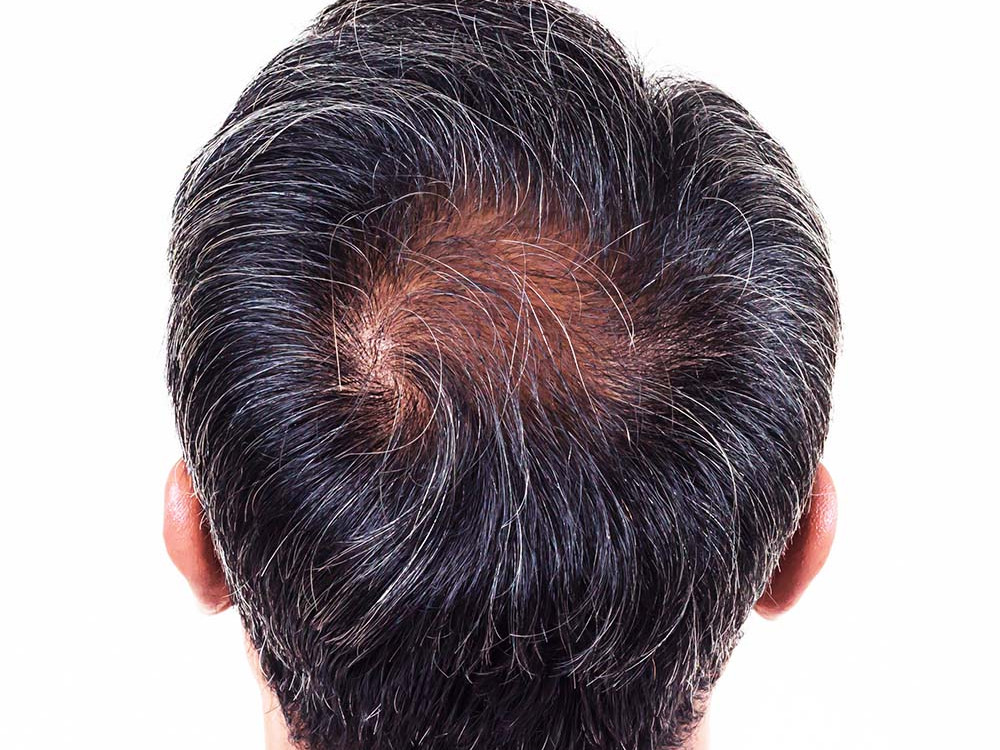
Male Pattern Baldness and The Norwood Scale
Understanding genetic hair thinning, Male Pattern Baldness and the Norwood…
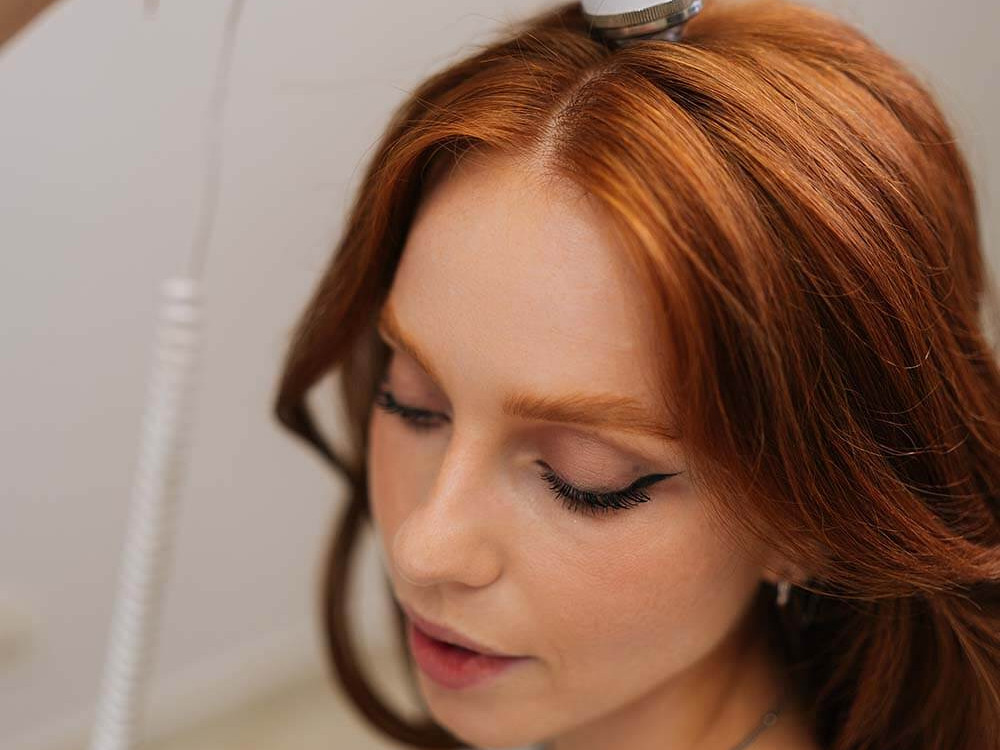
Female Hair Loss & The Ludwig Scale
We explain the unique biological triggers and diagnostic stages of female hair…